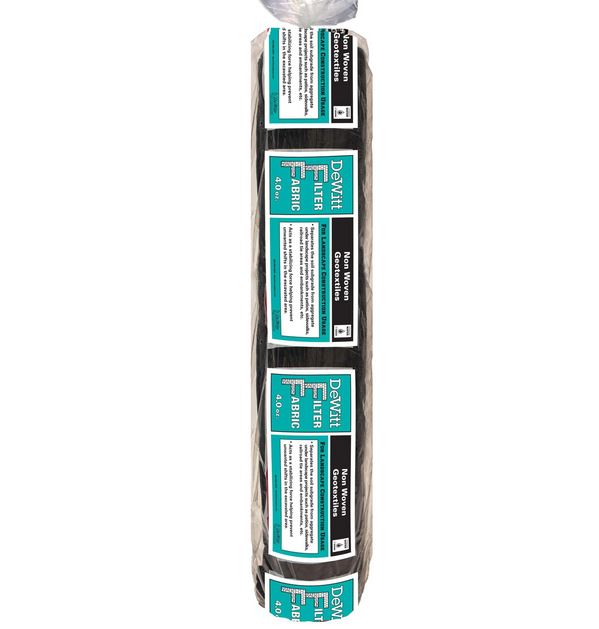
Soil filter fabric (non-woven geotextile) is the quiet workhorse in drainage and landscaping. It keeps soil where it belongs, lets water
pass, and protects gravel and pipes from clogging. Use this guide to choose the right fabric, install it correctly, and avoid callbacks.
Soil filter fabric is a non-woven, needle-punched polypropylene geotextile designed for separation, filtration, and drainage.
The random fiber matrix creates countless micro-pathways for water to flow while trapping fine particles. In plain terms: it keeps your gravel
clean and your drains flowing.
Technical term (made easy):Permittivity measures how fast water passes through a fabric. Higher permittivity = better drainage
with less risk of clogging.
Open, felt-like structure passes water, retains fines
Where Soil Filter Fabric Excels
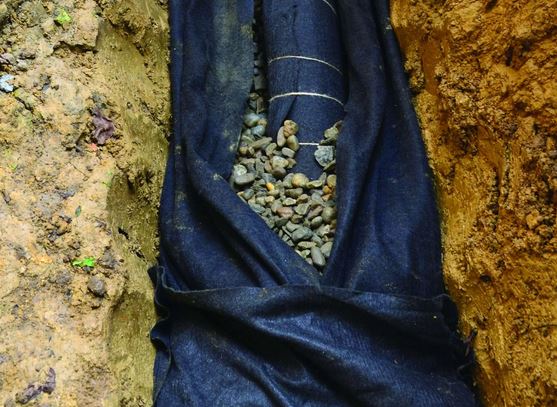
French & trench drains: Wrap the stone bed to keep silt out of pipes.
Behind retaining walls: Vertical separator between drainage gravel and native soil.
Under riprap & erosion stone: Filtration layer that resists scour and soil loss.
Driveway edges & culvert outlets: Reduces fine migration and pumping in soft soils.
Key Advantages
Reliable filtration: Needle-punched structure retains fines yet drains freely.
Clog-resistant: Three-dimensional fiber network resists blinding under variable flows.
Conformable: Drapes around curves, pipes, and rock without kinking.
Cost-effective longevity: Protects aggregate and pipes, cutting maintenance over time.
Line, fill with clean stone, then fold fabric to close
Step-By-Step Installation
Prep the subgrade: Excavate to line/grade; remove roots, organics, and sharp debris. Ensure positive drainage to your outlet.
Place fabric: Roll out smooth and taut with minimal wrinkles. In trenches, line the base and sidewalls.
Overlap seams: 12" typical; increase to 18–24" in soft subgrades or where settlement is expected.
Secure fabric: Use 6–8" staples every 12–24" (closer on curves/windy sites). Avoid puncturing over protrusions.
Add aggregate: Use clean, angular stone (#57 or per design). Don’t drive equipment directly on exposed fabric.
Wrap & close: Fold fabric over the top of the stone to create a continuous “envelope”; then backfill to grade.
Pro tip: Keep the fabric continuous around transitions (tee fittings, outlets) to avoid soil entry points.
How to Choose the Right Fabric Weight
4 oz class: General filtration for French drains, behind walls, and landscape beds.
Heavier non-wovens (6–8 oz): Higher puncture strength under riprap, high flows, or when additional robustness is needed.
Woven vs. non-woven: Choose non-woven for filtration/drainage; woven for higher tensile separation under roads/pavers.
Case Study: Solving a Soggy Side Yard with a French Drain Retrofit
Site: 55-ft side yard with clay soil and seasonal runoff. Problem: Standing water after storms and mulch washouts; existing
drain clogged with silt within a year due to no fabric separation.
Solution
Excavated a new trench to daylight; graded a consistent fall to the outlet.
Lined trench with 4 oz non-woven soil filter fabric; installed perforated pipe on a bed of clean #57 stone.
Wrapped fabric over the top to create a fully enclosed “sock,” then restored topsoil and mulch.
Results (First Season)
No standing water after heavy rains; outlet flows visibly during storms.
Clean-out inspection showed zero silt in the pipe—aggregate remained free-draining.
Mulch washouts eliminated; landscape stayed intact through multiple storm events.
FAQs
Can I use soil filter fabric under gravel paths?
Yes. It prevents soil fines from pumping into the gravel while allowing rainfall to infiltrate.
Is it the same as “weed barrier” fabric?
No. Weed barrier is typically a different product optimized to block light for plant suppression. Soil filter fabric is engineered for
filtration and drainage in civil/landscape applications.
How much fabric overlap do I need?
Use 12" overlaps in normal conditions; 18–24" in soft soils or high-flow zones. Keep the overlap direction aligned with water flow.





 Soil Filter Fabric Fabric