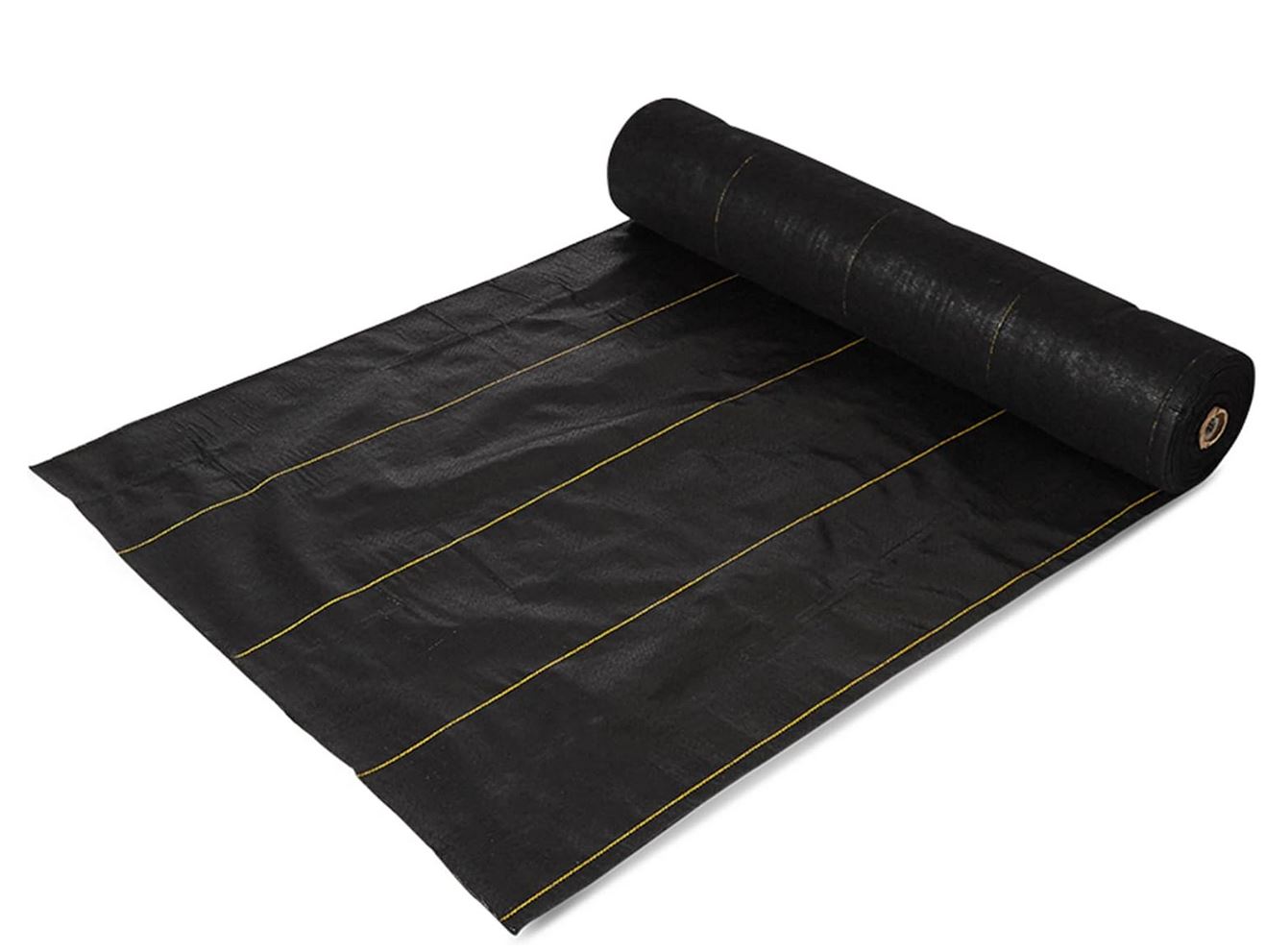
Reliable weed barrier by Dewitt provides a sound weed control solution for any landscape.
DeWitt Weed Barrier Fabric — SEO Guide
Dewitt Weed Barrier Fabric: An Overview
DeWitt PRO-5® Weed Barrier is a commercial-grade, 5 oz woven, needle-punched polypropylene fabric designed to stop weeds while
letting air, water, and nutrients reach plant roots.
DeWitt PRO-5®: 5 oz woven, needle-punched polypropylene
What Is DeWitt PRO-5® Weed Barrier?
PRO-5® is a heavy-duty
woven, needle-punched polypropylene landscape fabric. The woven base provides tensile strength and puncture
resistance, while needle-punching enhances water permeability—so your beds drain properly without soil washing through. It’s
UV-stabilized and designed for professional and commercial use, with planting guide stripes every 12" to speed spacing and
alignment.
Overview: It blocks light to prevent weeds, but still “breathes,” so plants get the moisture and air they need.
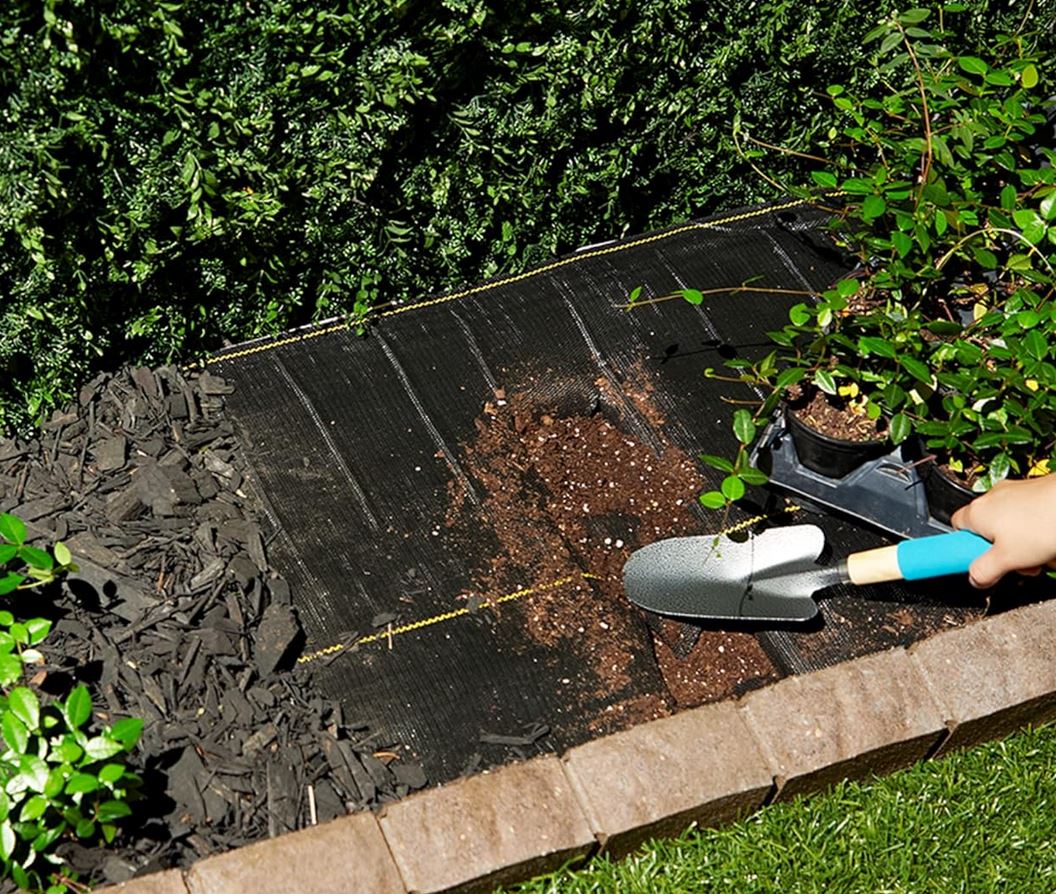
Typical install under mulch and decorative stone
Best-Fit Applications
Mulch & rock beds: Keeps fines from migrating and stops weeds from emerging.
Shrub & tree rings: Clean, low-maintenance zones around plantings—use the stripes to keep spacing even.
Walkways & edging: Reduces weed growth through gravel paths and garden borders.
Hardscape perimeters: Acts as a separator between soil and clean stone to protect drainage capacity.
Why PRO-5® Over Lighter Fabrics?
Strength: 5 oz construction resists tears and punctures from stone and foot traffic.
Filtration + permeability: Needle-punched structure passes water while filtering soil fines.
UV-resistant: Engineered to resist sun damage (still cover with mulch/rock for longest life).
Layout speed: 12" alignment stripes cut layout time for beds and rows.
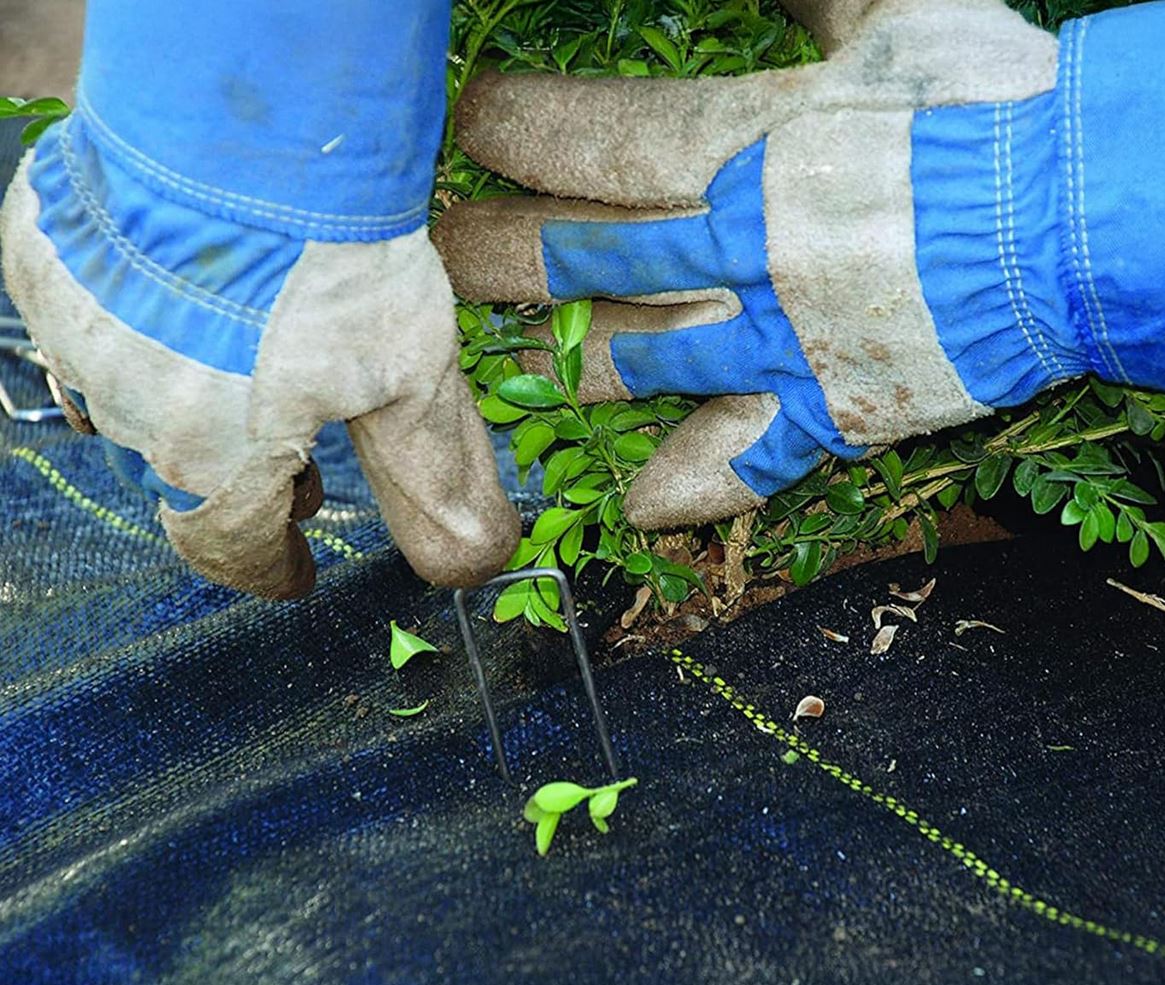
Secure with 6–8" staples; overlap seams 6–12"
How to Install DeWitt PRO-5® (Step-By-Step)
Prepare the area: Remove existing weeds, debris, and sharp roots/rocks. Grade for positive drainage.
Pre-treat tough weeds: For invasive roots, consider a pre-emergent or removal prior to fabric installation.
Roll out fabric: Smooth side up; align stripes with your planting plan. Keep the fabric taut—no wrinkles.
Overlap seams: 6–12" overlaps; use 6–8" landscape staples every 12–24" along seams and edges.
Cut planting X’s: Use a sharp knife to make small X-slits. Fold corners down to avoid fraying; do not overcut.
Cover promptly: Add 2–3" mulch or decorative stone to protect from UV and improve appearance.
Edge control: Use edging to contain rock/mulch and keep fabric covered at the margins.
Pro tip: Always keep the fabric covered; exposure to direct sunlight shortens service life.
Case Study: Converting a Weedy Rock Bed into a Clean, Low-Maintenance Border
Site: 60 linear feet of decorative river rock around a commercial office entry. Problem: Persistent weeds breaking through
the stone—maintenance crew spot-spraying monthly. The underlying “contractor grade” fabric had torn and clogged.
Solution
Removed rock and failed fabric; re-graded for drainage and compacted a thin base.
Installed DeWitt PRO-5® with 8" staples at 18" spacing; overlapped seams 10" and taped overlaps in high-traffic areas.
Replaced river rock (2–3" cover depth). Cut tight X-slits for shrubs and irrigation risers, folding corners under to reduce fray.
Result (After One Growing Season)
Weed pressure dropped to near-zero—only occasional edge escapes.
Maintenance time decreased by ~70% (no monthly spraying or rock raking).
Edges stayed neat; drainage improved thanks to the fabric’s filtration/permeability.
FAQs
Is PRO-5® breathable?
Yes. It’s engineered to allow water, air, and nutrients to pass while blocking light and filtering soil fines.
Do I still need mulch or rock on top?
Yes. Covering the fabric protects it from UV, improves aesthetics, and helps with moisture retention.
How do I choose staple length and spacing?
Use 6–8" staples in typical soils (longer in sandy soils). Space ~12–24" along edges and seams; closer in windy or high-traffic areas.





 Dewitt Weed Barrier Fabric